Price Discovery or Capped Sale? Analyzing the MegaETH Auction and the Case for Robust Launch Design





Key Takeaways
- •The MegaETH auction reached its $0.0999 price cap almost immediately, transforming from a price discovery mechanism into a capped, fixed-price sale with over $1.4 billion in commitments competing for approximately $50 million in tokens.
- •While 78.9% of participants were retail (committing less than $20,000), they represented only 14.04% of total committed capital, highlighting that price caps don't guarantee retail access—they just change the nature of competition from price-based to non-price metrics.
- •Alternative auction frameworks like Sealed-Bid, Uniform-Price auctions with Fixed-Quantity bidding can provide better price discovery and allocation certainty, while streaming, hold-contingent rewards offer more effective post-launch stability than binary lock-ups.
Quick Answer: The MegaETH token auction raised 0.0999 price cap almost immediately, transforming from a price discovery mechanism into a capped fixed-price sale with 28x oversubscription. This reveals a fundamental trade-off: price caps don't protect retail—they shift competition from price to non-price criteria. Alternative auction designs like sealed-bid uniform-price auctions with fixed-quantity bidding offer better price discovery and allocation certainty.
Price Discovery or Capped Sale? Analyzing the MegaETH Auction and the Case for Robust Launch Design
The $1.4 billion event highlights an important trade-off in token launches. We analyze the auction data and explore alternative frameworks for achieving fair distribution and post-launch stability.
The $1.4 Billion Event
The recent MegaETH auction attracted over $1.4 billion in total commitments, making it one of the largest token launches of 2025. The launch was structured as an English Auction with a firm ceiling price of $0.0999 per token.
Due to high demand, bids reached this cap within hours, effectively halting the price discovery process almost immediately.
At this point, the mechanism's primary function shifted. It was no longer an auction for price discovery but instead operated as a capped, fixed-price sale. This design also meant the auction was, by definition, not optimized for revenue maximization. With over $1.4 billion in commitments competing for what was an approximately $50 million sale (500 million tokens at $0.0999), the market indicated willingness to pay a higher price—approximately 28x oversubscription.
Instead, allocation was determined by other, non-price criteria, including a user's on-chain history and social engagement. This design presents an interesting trade-off: while it moves away from pure price-based allocation, it creates an incentive for participants to engage with the project's community and social channels to increase their chances of selection.
This outcome highlights an important choice for any launch: designing for a high-demand, capped sale versus designing for true price discovery. As we'll explore, achieving a wider, more equitable distribution can be a notable second-order benefit, seeding a more decentralized community and contributing directly to post-launch price stability.
The Retail Dilemma: Does a Price Cap Actually Help?
A primary argument for a price cap is to "protect retail" from being "priced out" in a competitive, uncapped auction.
However, the MegaETH auction data suggests a cap doesn't necessarily guarantee retail access; it just changes the nature of the competition from price-based to non-price-based selection.
- In an uncapped auction, participants with smaller capital might be priced out.
- In a capped, oversubscribed sale, participants are competed out—not by price, but by failing to have the "OG role" or specific on-chain/social history required to win the allocation lottery.
Let's analyze the auction's distribution data, defining "retail" as participants committing less than $20,000.
Based on the published auction results, we can see a clear distinction between participant numbers and the capital they controlled:
- By Participant Count: The vast majority of bidders, 78.9%, were retail participants.
- By Capital Committed: This large group of retail bidders collectively represented only 14.04% of the total $1.4 billion in committed capital.
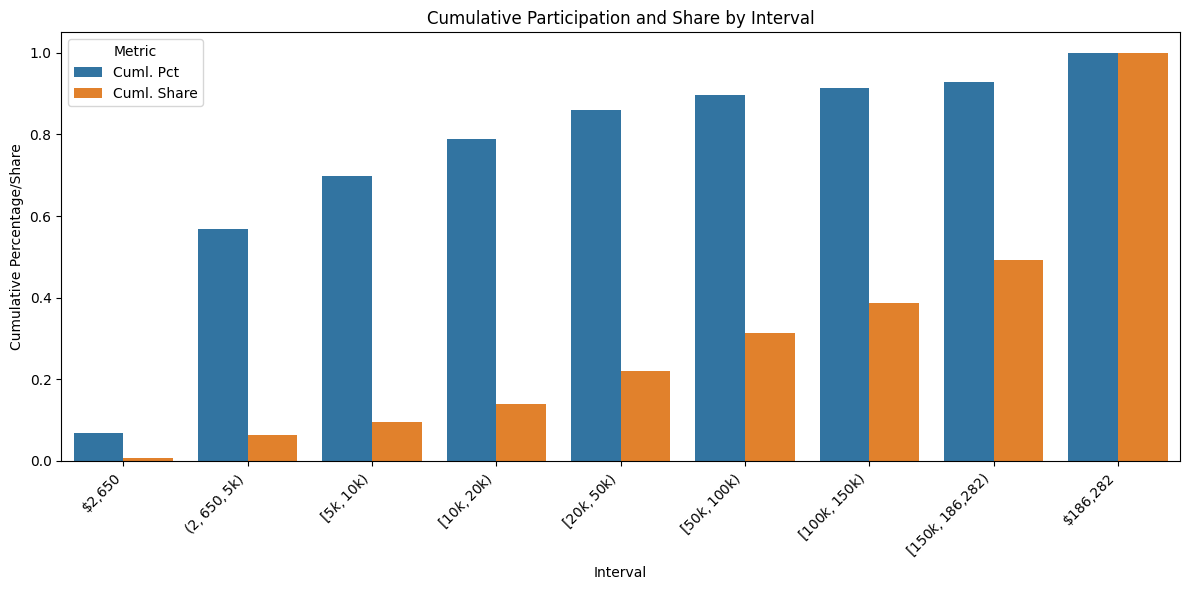
Figure 1: While 78.9% of all participants were retail, they represented only 14.04% of the committed capital. In the oversubscribed, capped environment, this forced them to compete for allocation based on non-price metrics.
An Alternative Framework: The Uniform-Price, Fixed-Quantity Model
Let's analyze one alternative framework that can be used to navigate these trade-offs: the Sealed-Bid, Uniform-Price Auction. This model is structured around two key principles.
1. The Bidding Mechanism
A public-facing English auction can create a "race to the cap" where participants compete in real-time, often leading to gas wars and strategic bidding. An alternative is a Sealed-Bid model. In this format, all participants submit their bids privately during the auction window. This prevents gas wars and encourages participants to bid their true, honest valuation. At the end, a single Uniform Clearing Price is calculated, and all winning bidders (those who bid at or above this price) pay that same price for their tokens.
2. The Bidding Format
This is an important, and often overlooked, component of auction design.
- Fixed-Capital Bidding (The MegaETH model): Participants commit a dollar amount (e.g., "I commit $5,000"). In a highly oversubscribed sale, this can result in a suboptimal user experience. A $5,000 commitment might only secure $100 worth of tokens, with the other $4,900 being refunded. The participant has no certainty over their final allocation size.
- Fixed-Quantity Bidding (An alternative): This model has participants bid for a specific number of tokens at a maximum price (e.g., "I want 500 tokens at a max price of $2.00 each"). This model provides certainty on allocation. If the final uniform clearing price is, for example, $1.50, our bidder wins and receives the full 500 tokens they requested. This model serves as a safeguard for participants, protecting their desired allocation size.
An Interactive Look at Auction Models
The simulator below lets you explore how Fixed-Capital and Fixed-Quantity bidding models affect your allocation in an oversubscribed auction. Adjust the sliders to see how different parameters impact your outcome.
Fixed-Capital Bidding (MegaETH Model):
You commit a dollar amount and everyone pays the same fixed price cap ($0.0999 per token). You receive tokens based on your proportional share of total commitments. In an oversubscribed auction, you typically receive only a fraction of what you committed. Your allocation also depends on non-price factors like on-chain history or social engagement, which can further reduce your share.
Trade-off: You always get some allocation, but the amount is unpredictable and may be significantly less than your commitment. The price is fixed (no price discovery).
Fixed-Quantity Bidding (Alternative Model):
You bid for a specific quantity of tokens at your maximum acceptable price. The auction uses a sealed-bid, uniform-price mechanism where all winning bidders pay the same clearing price. If your max price is above the clearing price, you win and receive 100% of your desired quantity at the clearing price. If your max price is below the clearing price, you receive 0 tokens and get a full refund.
Trade-off: If you win, you get exactly what you bid for with full certainty. However, if the clearing price exceeds your max bid, you get nothing—there's no partial allocation.
Key Insight: Adjust the max bid and clearing price sliders to see how market conditions affect the Fixed-Quantity model. When demand is high and the clearing price rises above your max bid, you're completely excluded—unlike Fixed-Capital where you'd still receive a proportional share.
Compare Auction Models: Uncertainty vs Certainty
See how Fixed-Capital and Fixed-Quantity bidding models affect your allocation in an oversubscribed auction
You win (clearing price < your max bid)
Fixed-Capital Bidding
Low CertaintyFixed price: $0.0999. Allocation depends on oversubscription and non-price criteria.
⚠️ Uncertainty: Unpredictable allocation. May receive only 2% of commitment.
Fixed-Quantity Bidding
WinsBid: 41,667 tokens @ max $0.1200. Clearing: $0.1050.
✓ Win: Max ($0.1200) > clearing ($0.1050). Get 100% at $0.1050.
Beyond the Auction: Designing for Post-Launch Stability
A successful auction is not synonymous with a successful launch. A notable risk for any project is the "Day 1" sell-off from mercenary participants or misaligned investors, which can undermine price stability and community confidence.
The Lock-up Incentive
The MegaETH auction offered a 10% discount for a 1-year lock-up, which was optional for non-U.S. participants. This incentive, however, saw low adoption. According to post-auction analysis, only 6.4% of the total tokens sold were reportedly subject to this lock-up. This suggests the binary, long-term trade-off was not compelling for most participants, who prioritized liquidity.
An Alternative Model: Streaming, Hold-Contingent Rewards
This model seeks to align incentives without forcing a binary, multi-year lock-up.
- Mechanism: Instead of an upfront discount, a bonus or reward is streamed to the participant over a set period (e.g., 60 days).
- The Key Condition: The reward stream is contingent on the user holding their base token allocation. If they sell their tokens, the reward stream stops.
- The Impact: This creates a continuous financial incentive to hold, aligning participants with long-term price stability and filtering for committed community members over short-term flippers.
Conclusion: Building for the Long Term
The MegaETH auction was effective at building interest and attracting capital. Its design also provides a useful case study on the trade-offs between a capped sale (which can be used to incentivize social engagement) and a true price discovery mechanism.
Relying on non-price factors for allocation can create a suboptimal user experience for those who are filtered out. Additionally, it may not achieve the goal of wide, fair distribution, which is a key component of a decentralized network.
A robust launch should be approached as a holistic design problem that considers:
- Fair Distribution: Ensuring tokens are equitably distributed, which can be quantified with metrics like the Gini Coefficient.
- True Price Discovery: Using mechanisms that allow the market to establish a fair price.
- Post-Launch Stability: Building in incentives that align all participants with the long-term health of the ecosystem.
What This Means
For protocol teams designing token launches, the MegaETH auction demonstrates that price caps alone don't solve distribution challenges—they simply shift the competition to non-price dimensions. Alternative mechanisms like sealed-bid, uniform-price auctions with fixed-quantity bidding can provide better price discovery and allocation certainty, while streaming, hold-contingent rewards offer more flexible approaches to post-launch stability than binary lock-ups.
For participants, understanding these trade-offs helps set realistic expectations. In capped, oversubscribed sales, retail participants should expect allocation uncertainty and prepare for potential refunds. In fixed-quantity models, participants gain allocation certainty but face the risk of complete exclusion if market clearing prices exceed their maximum bids.
References
For more insights on tokenomics design and auction mechanisms, explore our research on L1-L2 economic alignment and token launch strategies.
Discuss This Article With AI
Get instant analysis and insights from leading AI assistants
How We Can Help
Interested in similar solutions for your project? Explore our related services: